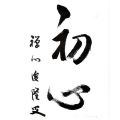

It is impossible to describe the nature of mind. All analogies are provisional, for lacking better alternatives.
One thing often employed to explain the nature of mind, for example, is mirror. Mirror merely reflects things as they appear in front of it, without anticipation beforehand, without likes or dislikes, and without attachment or clinging thereafter.
The mind of a sage is pure and still, impartially reflecting everything. It is not inside the body, not outside the body, and not in the middle. It is not in the past, not in the present, and not in the future. It is nowhere yet everywhere, reflecting anything and everything.
The analogy of mirror can’t possibly say everything about the nature of mind. A mirror is merely an object without knowing. If the nature of mind was as ignorant as a mirror, how could it be the omniscient true Wisdom? For the same reason, other analogies such as pearl or sky cannot fully describe the nature of mind either.
by Grand Master Lian Chi (蓮池大師), the Eighth Patriarch of Pure Land Buddhism
心喻 – 錄自明末蓮池大師《竹窗隨筆》(初筆)
心無可為喻,凡喻心者,不得已而權為彷彿,非真也。試舉一二: 如喻心以鏡。蓋謂鏡能照物,而物未來時,鏡無將迎; 物方對時,鏡無憎愛; 物既去時,鏡無留滯。聖人之心,常寂常照,三際空寂,故喻如鏡。然取略似而已,究極而論,鏡實無知。心果若是之無知乎,則冥然不靈,何以云妙明真體? 或喻寶珠,或喻虛空,種種之喻亦復如是。
 Buddha Mind