
Originally, Buddhism is all about the Buddha’s truthful teachings, which cover the totality of phenomena and principles, encompassing everything from worldly lives to otherworldly matters, from birth to death, from dust mode to the infinite universe.
It remains a fact that no research in modern science is anywhere near as comprehensive as the Buddha’s discoveries. No philosophy on Earth is anywhere near as profound as the Buddha’s insights. Not even Confucius’ teaching is anywhere near as sophisticated as the Buddha’s wisdom – Confucianism only concerns this current one lifetime, while the Buddha’s teachings thoroughly deal with infinite lifetimes, unraveling all the problems conclusively, digging all the way down to the most fundamental level.
In good old days, a Buddhist monastic would put as many hours as possible a day (generally up to 16 hours) into both study and practice, including listening and contemplating lectures, reading sutras, doing sitting meditation, as well as chanting the Buddha’s name (mostly Amitabha Buddha). Such study and practice are indispensable to the quest for purifying one’s mind, for cultivating Samadhi (the state of deepest concentration), and ultimately for attaining Bodhi (Perfect Enlightenment).
It is necessary for an aspiring Buddhist to fill daily life with ardent learning and practice, leaving no room for all those discursive, habitual, discriminating thoughts to ramble about in the mind. Only through continuous diligence over a long time (for as long as one continues to live, actually), one may hopefully attain mental purity and clarity, so as to face death with composure and to navigate the journey beyond death with confidence.
Nowadays, however, there are at least four other deviations of Buddhism:
(1) The religious Buddhism
Buddhism was never intended by the Buddha as a religion in the first place, but it has become one in the past few hundred years. Many monasteries nowadays only serve as a place for people to make offerings, to pray for blessings, and to conduct memorial services for the deceased, which indeed may remind people to be careful about karma, but ultimately it fails to live up to Buddhism’s full scope and capabilities in leading sentient beings to attain liberation from samsara – the endless cycles of birth and death and rebirth.
(2) The academic Buddhism
Many colleges nowadays have courses on Buddhism. It is ignorant to reduce Buddhism into merely an academic field of study. The Buddha’s teachings are a complete university in itself, the highest education for all beings, and the most comprehensive learning system which covers the whole roots, stems, and branches of the Ultimate Wisdom.
(3) The showbusiness Buddhism
This deviation performs singing and dancing, with short and shallow ‘Dharma talk’ in between, which might indeed help common folks to feel cozy and comfy about Buddhism, but nonetheless dilute and cheapen Buddhism into entertainment and pastime.
(4) The cult Buddhism
Many con artists put on the clothing of ‘spiritual master’ and tailor the Buddha’s teachings to suit their personal interests. Naive people can fall prey to their enticing and appealing propaganda and become their loyal followers, deviating further and further away from the Buddha’s truthful teachings. In The Surangama Sutra, the Buddha has warned us about this phenomenon: “Wicked imposters, as numerous as the sands of Ganges River, will multiply in the Dharma-Ending Age to distort the Buddha’s teachings and mislead all beings.” (邪師說法 如恆河沙)
These deviated forms of Buddhism do not represent the essence of Buddhism. Anyone aspiring to become the Buddha’s disciple in the truest sense must be wary of all the ‘sugar bombs’ and steer clear of them.
Ultimately, a Buddhist’s journey is an internal one – only you can tell whether something rings true to you or not. In order to maintain that internal measure in an astute state, one must establish certain principles guiding one’s practice. Here are the nine points I have found to be worthy of keeping in mind:
• Reciting Amituofo is the foremost important practice (念佛為主)
• Meditating on the primordial mind is the key (觀心為要)
• Watching one’s mind, body and speech are the precepts (攝心為戒)
• Keeping the precepts is the base (持戒為本)
• The Buddha’s teachings are the most solid ground for everything to build on (經教為依)
• Genuine fellow practitioners are the crutches to lean on (善友為伴)
• Pure Land is the Home (淨土為歸)
• Safeguarding and spreading the Dharma are a Buddhist’s incumbent and imperative responsibilities (護弘正法)
• Along the Path to Buddhahood, diligence is a practitioner’s most essential armor (精進佛道)

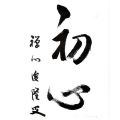
 Buddha Mind