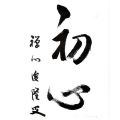

The Ordinary Mind and the Original Mind
Then Ananda stood up in the midst of the great assembly. He uncovered his right shoulder, placed his right knee on the ground, put his palms together respectfully, and said to the Buddha, “Because of the special loving-kindness bestowed on me as the Buddha’s youngest cousin, I have the great fortune to enter the monastic life and become learned, but I am not yet free of outflows and therefore still not able to realize the true mind. That’s why I was unable to resist the Kapila spell and was lured into a house of courtesans. Now I can’t wait to embark on the path of calming the mind and realizing the true essence of mind! May all unenlightened people like me who have the tendency to succumb to wrong deeds also benefit from the Buddha’s instruction and guidance.” Upon finishing speaking, Ananda bowed to the ground. And with keen anticipation, the rest of the assembly all readied themselves to receive the precious teaching.
Meanwhile, radiating from the Buddha’s face was an array of lights as brilliant as a hundred thousand suns. The lands were shaken by six kinds of quakes. And an infinite number of worlds manifested throughout all ten directions at the same time. Then the Buddha’s awe-inspiring power brought all worlds into one single realm, in which all the great Bodhisattvas — while remaining in their own lands — placed their palms together with utmost reverence to listen.
So the Buddha said to Ananda, “Since beginningless time, all beings, due to the innumerable distortions in their minds, have been creating seeds of karma, which then grow and ripen like a cluster of sour fruits on a ruksa tree.
“People who undertake spiritual practice but fail to realize the ultimate enlightenment, such as the Hearers of the Teaching, the Solitary Sages, the celestial beings, the demon-kings, as well as the demons’ retinues, who follow the wrong paths — they all fail because they do not understand two fundamentals, so they are mistaken and confused in their practice. They are like someone who hopes to make a delicious meal by cooking sands. Even if the sand were cooked for eons as countless as motes of dust, no meal would ever result from it.
“Ananda, what are the two fundamentals? The first is the ordinary mind, which is the basis of death and rebirth since beginningless time. It is this mind that all beings use to make discriminations and distinctions, and thus get themselves entrapped in all sorts of entanglements, mistaking them as their selves.
“The second fundamental is the original mind, the primordial and pure essence of Nirvana, which also has no beginning. It is the original light, the innermost nature of consciousness. All conditioned phenomena arise from it, and then beings lose track of it among the phenomena. This primordial light is always within each being, yet they are unaware of it and wandering off into various distractions.”
“Ananda, because you now wish to know about the path of calming the mind and wish to be freed from samsara, I will then question you again.” Upon saying this, the Buddha raised His golden arm and bent His five fingers — each of them marked with lines in the shape of a wheel — and asked Ananda, “Did you see something?”
Ananda said, “I did.”
“What did you see?”
“I saw the Buddha raise His arm and bend His fingers into a fist that sends forth light, dazzling my mind and eyes.” Ananda replied.
The Buddha said, “When you saw my fist emitting light, what did you see it with?”
Ananda answered, “All of us in the great assembly saw it with our eyes.”
The Buddha asked, “Your eyes can see my fist, then how about your mind?”
Ananda said, “Once again, now the Buddha is asking me about my mind’s location. I will say my mind is what I have been using to determine where it might be. Whatever that has the capability of making such distinctions is my mind.”
The Buddha exclaimed, “Ananda! That is not your mind!”
Startled, Ananda stood up, placing his palms together, and said to the Buddha, “If that is not my mind, what is it?”
The Buddha replied, “It is merely your mental processes that assign false and illusory attributes to the world of perceived objects.
“These processes delude you about your true nature and have since beginningless time caused you to mistake a burglar for your own child — to lose touch with your own original, everlasting mind — and thus you are bound to the cycles of death and rebirth.”
Ananda said to the Buddha, “I am the Buddha’s favorite cousin. It was my mind that loved the Buddha and led me to enter the monastic life. That mind of mine has been responsible not only for my serving the Buddha but also for my serving all Buddhas and all wise teachers throughout all lands. It has always been that mind that keeps mustering great courage to practice every difficult aspect of the Dharma. If I were ever to slander the Dharma and sever my good roots in it, that mind of mine would be the cause too. If such a consciousness is not the mind, then I suppose I have no mind, just like a clod of earth or a piece of wood. Apart from my mind’s awareness and its knowledge, I am nothing. Why does the Buddha say that it is not my mind? Now I am truly frightened and worried! Everyone here in the great assembly must be full of confusion too. I wish the Buddha would enlighten us all.”
So, in order to guide Ananda and the great assembly into the state of mind where no mental objects arise, the Buddha reached out from the Lion’s Seat and circled his palm on the crown of Ananda’s head, and said, “The Buddha has often explained that all phenomena that come into being are nothing more than manifestations of the mind. All things that are subject to the principle of cause and effect — from the largest world to the smallest dust mote — they come into being because of the mind. If we examine the fundamental nature of everything in the world, Ananda, down to even the smallest wisps of grass, we can see that each has an entity. Even space has a name and attributes. Given that, how could this wondrous mind — the mind that is the basic nature of all mental states — lacks a reality itself?
“But if, as you insist, that this thing which makes distinctions, which knows and understands is indeed the mind, then it would have its own essential nature independent of its entanglement with objects — with visible objects, as well as sounds, odors, flavors, and objects of touch. Yet now, as you listen to my Dharma, it is because of sounds that you can distinguish my meaning. Even if you were to retreat into a state of quietude in which all seeing, hearing, awareness of tastes, and tactile awareness ceased, you still would be making distinctions among the shadowy objects of cognition in your mind.
“I am not demanding that you just accept that this distinction-making capacity is not the mind. But examine your mind in minute detail to determine if it is a distinction-making capacity existing independent of its perceived objects of awareness. If indeed it exists independently, then that would truly be your mind. If, on the other hand, your distinction-making capacity does not have an essential nature apart from its perceived objects, then it would be a perceived object too — a shadowy mental object. Perceived objects are not permanent, and once this so-called mind ceases to exist as such, it would have no more reality than a turtle with fur or a hare with horns, and your Dharma-body would cease to exist along with it. Then who would be left to practice and to perfect patience with the state of mind in which no mental objects arise?”
At that point Ananda and the others in the great assembly were utterly dumbfounded. They had nothing to say.
The Buddha said to Ananda, “The reason why so many practitioners in the world do not succeed in putting an end to outflows and becoming Arhats — even though they may have passed through all nine of the successive stages of Samadhi — is that they are attached to distorted mental processes that come into being and then cease to be, and they mistake these processes for real. That is why, even though you have become quite learned, you have not become a sage.”
When Ananda had heard that, he again wept sorrowfully. Then he bowed to the ground, knelt on both knees, placed his palms together, and said to the Buddha, “Ever since I followed the Buddha and resolved to enter the monastic life, I have been relying on the Buddha’s awe-striking powers. I often thought to myself that there’s no reason for me to toil at spiritual practice, because I just expected that the omnipotent Buddha would transfer some of his Samadhi to me. I never realized that the Buddha could not stand in for me, neither in body nor in mind. Though my body has entered the monastic life, my mind has not entered the Path. I am like that poor son who ran away from his father. Today I realize that if I do not practice on my own, I might have never really learned anything at all, just like someone who talks of food all day long will never get full.
“I know all beings are bound by two obstructions, and as a consequence we are unaware of the mind that is still and everlasting. I hope the Buddha would take pity on us who are destitute and homeless, and disclose the wondrous mind that truly knows, so as to open our eyes to the Path.”
Then the Buddha poured forth resplendent light from the symbol of purity (卍) on his chest. The light, brilliant and radiant with hundreds of thousands of colors, shone throughout all ten directions simultaneously to illuminate the innumerable Buddha-lands, before it returned to shine upon the great assembly and Ananda.
The Buddha said to Ananda, “I now will raise for all of you a great Dharma-banner so that all beings in all ten directions can gain access to what is wondrous and subtle — the pure and luminous wisdom mind — and thus open your clear-seeing eyes.”
尔时阿难在大众中,即从座起,偏袒右肩,右膝着地,合掌恭敬,而白佛言:我是如来最小之弟,蒙佛慈爱 ,虽今出家,犹侍憍怜,所以多闻,未得无漏,不能折伏娑毗罗咒,为彼所转,溺于淫舍,当由不知真际所诣!惟愿世尊 ,大慈哀愍,开示我等,奢摩他路;令诸阐提,隳弥戾车。作是语已,五体投地,及诸大众,倾渴翘伫,钦闻示诲。
尔时世尊从其面门,放种种光,其光晃耀,如百千日。普佛世界,六种震动,如是十方微尘国土,一时开现。佛之威神,令诸世界 ,合成一界。其世界中,所有一切诸大菩萨,皆住本国,合掌承听。
佛告阿难:一切众生,从无始来,种种颠倒,业种自然,如恶叉聚。诸修行人,不能得成无上菩提,乃至别成声闻缘觉,及成外道,诸天魔王,及魔眷属。皆由不知二种根本,错乱修习 ,犹如煮沙,欲成嘉馔,纵经尘劫,终不能得。云何二种?阿难!一者、无始生死根本。则汝今者,与诸众生,用攀缘心,为自性者。二者、无始菩提涅槃,元清净体。则汝今者,识精元明,能生诸缘,缘所遗者。由诸众生 ,遗此本明,虽终日行,而不自觉,枉入诸趣。
阿难!汝今欲知奢摩他路,愿出生死,今复问汝。即时如来举金色臂,屈五轮指,语阿难言:汝今见否?阿难言:见 !佛言:汝何所见?阿难言:我见如来举臂屈指,为光明拳,耀我心目。佛言:汝将谁见?阿难言:我与大众,同将眼见。佛告阿难:汝今答我,如来屈指 ,为光明拳,耀汝心目。汝目可见,以何为心,当我拳耀?阿难言:如来现今征心所在,而我以心推穷寻逐,即能推者,我将为心。佛言:咄!阿难 !此非汝心!阿难矍然,避座合掌,起立白佛:此非我心,当名何等?佛告阿难:此是前尘虚妄相想,惑汝真性 。由汝无始,至于今生,认贼为子,失汝元常,故受轮转。
阿难白佛言:世尊!我佛宠弟,心爱佛故,令我出家。我心何独供养如来,乃至遍历恒沙国土,承事诸佛及善知识 ,发大勇猛,行诸一切难行法事,皆用此心;纵令谤法,永退善根,亦因此心。若此发明,不是心者,我乃无心,同诸土木 ,离此觉知,更无所有。云何如来说此非心?我实惊怖;兼此大众,无不疑惑。惟垂大悲,开示未悟。
尔时世尊开示阿难,及诸大众,欲令心入无生法忍。于师子座,摩阿难顶,而告之言:如来常说,诸法所生,唯心所现 ,一切因果、世界微尘,因心成体。阿难!若诸世界,一切所有,其中乃至草叶缕结,诘其根元,咸有体性。纵令虚空,亦有名貌。何况清净妙净明心,性一切心,而自无体?若汝执吝分别觉观,所了知性,必为心者,此心即应离诸一切色 香味触,诸尘事业,别有全性。如汝今者,承听我法,此则因声而有分别。纵灭一切见闻觉知,内守幽闲,犹为法尘 ,分别影事。我非敕汝,执为非心,但汝于心,微细揣摩,若离前尘有分别性,即真汝心;若分别性,离尘无体,斯则前尘分别影事。尘非常住 ,若变灭时,此心则同龟毛兔角,则汝法身,同于断灭,其谁修证无生法忍?即时阿难与诸大众,默然自失 。佛告阿难:世间一切诸修学人,现前虽成九次第定,不得漏尽,成阿罗汉,皆由执此生死妄想,误为真实。是故汝今虽得多闻,不成圣果。
阿难闻已,重复悲泪,五体投地,长跪合掌,而白佛言:自我从佛,发心出家,恃佛威神,常自思惟,无劳我修 。将谓如来,惠我三昧。不知身心本不相代,失我本心,身虽出家,心不入道,譬如穷子,舍父逃逝。今日乃知 ,虽有多闻,若不修行,与不闻等,如人说食,终不能饱。世尊!我等今者,二障所缠,良由不知,寂常心性 。惟愿如来,哀愍穷露,发妙明心,开我道眼。
即时如来,从胸卍字,涌出宝光。其光晃昱,有百千色,十方微尘,普佛世界,一时周遍。遍灌十方所有宝刹 ,诸如来顶,旋至阿难,及诸大众。告阿难言:吾今为汝建大法幢,亦令十方一切众生,获妙微密,性净明心,得清净眼。

 Buddha Mind